
Door supervision explained
Published 17 March 2026
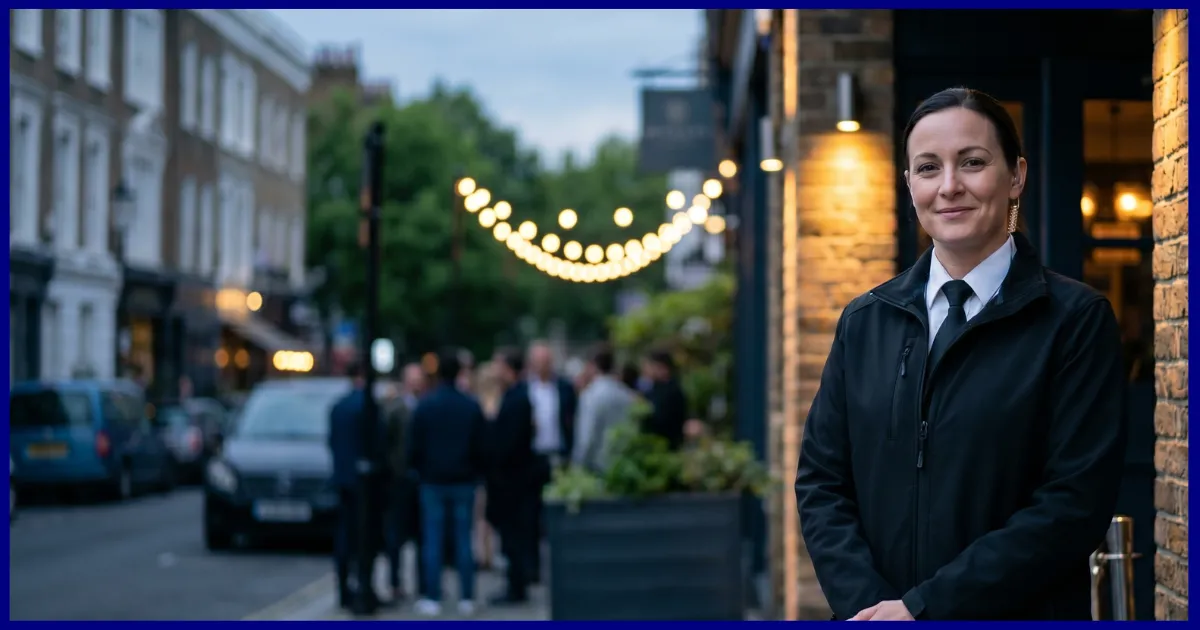
“Door supervision” is one of those phrases people half-recognise but rarely have defined for them. If you’re booking security for a bar, a club night, a private event on licensed premises, or any event where alcohol is served, it’s the term that decides which staff you legally need — and getting it wrong can put your licence and your guests at risk. This guide explains what door supervision actually means, what an SIA door supervisor does, the licence and training behind the role, and how to hire and verify one properly.
Door supervision meaning: what it actually is
Door supervision is the regulated security function of controlling who enters a venue or event and how they behave once inside, on premises where that control is a licensing requirement. It is not simply “standing on a door”. It is a legally defined activity under the Private Security Industry Act, and in the UK it must be carried out by someone holding a valid SIA Door Supervisor licence.
The role exists because licensed premises — anywhere alcohol is sold or regulated entertainment takes place — carry specific legal obligations around age, capacity, public safety and order. Door supervision is how those obligations are met at the point of entry and on the floor.
What an SIA door supervisor does
A good door supervisor does far more than the public usually sees. The core duties include:
- Entry, ID and age checks. Verifying that guests are old enough, that tickets or memberships are valid, and that anyone refused previously isn’t readmitted. Challenge-25 style age checks are a routine part of the job.
- Searching. Where a venue’s policy or licence conditions require it, conducting lawful, consent-based searches for prohibited items. Searches must be proportionate, properly explained, and recorded where appropriate.
- Managing capacity. Counting people in and out so the venue never exceeds its safe and licensed occupancy — a genuine safety-critical task, not a formality.
- Conflict management. De-escalating tension, drink-fuelled arguments and frustration before they become incidents. The best door supervisors prevent trouble with a conversation, not their hands.
- Lawful refusals and ejections. Refusing entry to, or removing, people who are too intoxicated, behaving unacceptably, or breaching venue rules — using only reasonable force, within clear legal limits, and as a last resort.
- Licensed-premises duties. Supporting the premises licence holder: watching for drug activity, preventing under-age and proxy sales, keeping fire exits clear, and helping ensure an orderly, well-managed dispersal at the end of the night.
Underpinning all of this is record-keeping and judgement. Incident logs, refusal records and a calm, consistent manner are what separate a professional from someone who simply looks the part.
Door Supervision licence vs Security Guarding licence
This is where most confusion — and most compliance risk — lives. The SIA issues different licence types for different activities, and the two you’ll hear about most are Door Supervision and Security Guarding.
- A Security Guarding licence covers static guarding, patrols and access control on premises where no licensable door-supervision activity is taking place — think a warehouse, a construction site, or a corporate reception.
- A Door Supervision licence covers everything a security guard does plus the licensed-premises door role: alcohol, regulated entertainment, and the entry/conduct control that goes with them.
The practical rule: a door supervisor can usually cover security-guarding work, but a security guard cannot lawfully cover a licensed door. If your venue serves alcohol or hosts regulated entertainment and you’re deploying staff to manage entry and conduct, those staff legally need the Door Supervisor licence. Booking security-guard-licensed staff for a licensed door is a compliance failure that can expose both you and the provider.
When you genuinely need licensed door staff, our door supervisor hire service places staff with the correct licence for the setting — and for events that blend roles, our event security guards team maps each position to the right licence.
The training behind the licence
You can’t simply apply for a Door Supervisor licence. Behind it sits a recognised training qualification covering, at a high level:
- Conflict management — reading body language, defusing aggression, and keeping situations calm.
- Physical intervention — the legal and practical limits of using force, and safer ways to disengage or remove someone when there’s no alternative.
- First aid — basic emergency response, because door staff are often first on the scene.
- Counter-terrorism (ACT) awareness — recognising and responding to suspicious behaviour, now a standard part of the role’s awareness training.
The qualification ends in assessment, and the licence itself requires identity and criminality checks before the SIA will issue it. That combination — training, vetting and an in-date licence — is what makes a door supervisor a regulated professional rather than just a large person on a door.
The “bouncer” misconception
The word “bouncer” conjures a stereotype: intimidating, confrontational, there to throw people out. That image belongs to an era before regulation. Today’s door supervisor is licensed, trained, accountable, and judged far more on the incidents they prevent than on any they have to handle physically.
A professional door team is, in practice, a risk-management presence. They keep capacity safe, spot problems early, look after vulnerable guests, and make the difference between an event that runs smoothly and one that ends up in an incident report. Calling that a “bouncer” undersells the job considerably.
How to hire — and verify — properly
Hiring door supervision well comes down to three things:
- Match the licence to the setting. Be clear about whether alcohol or regulated entertainment is involved, so your provider deploys Door Supervisor-licensed staff where the law requires them.
- Verify every licence. Each SIA licence carries a 16-digit number that can be checked on the public register. Don’t take it on trust — confirm it. Our SIA licence checker makes this quick, and our guide on how to check an SIA licence walks through exactly what to look for.
- Use the right role for the job. Not every position needs a door supervisor. For crowd flow and welcome with no licensable activity, a steward may be the better fit — see steward vs door supervisor for where the line sits. A good provider helps you blend roles rather than over-licensing every position.
A reputable provider will happily show you licences, explain why each role is staffed the way it is, and carry proper insurance. If a quote dodges those questions, treat it as a warning sign.
Get door supervision sorted
Whether you’re running a bar, a club night, a private party on licensed premises, or a larger event with alcohol on site, the right answer is licensed, trained, verifiable door staff in the right positions. We’ll handle the licensing, the planning and the verification so you don’t have to.
Get a quote and we’ll map the door-supervision cover your event needs — with the correct licences in every role and a clear, all-inclusive price.