
Close protection explained
Published 14 April 2026
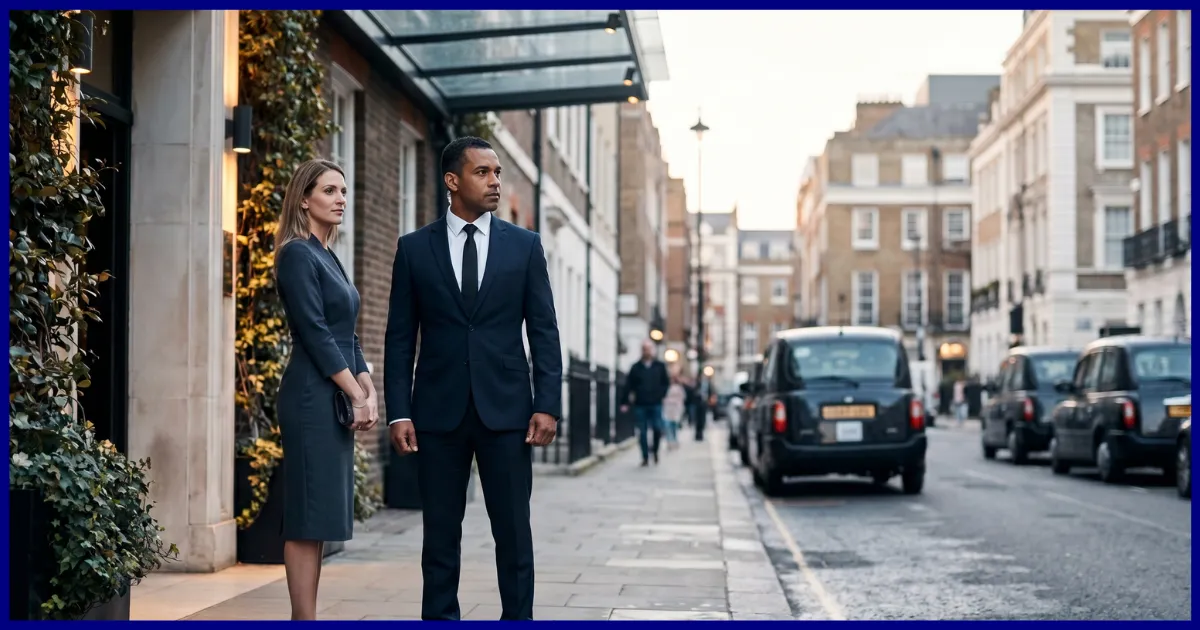
Say “close protection” and most people picture an earpiece and a dark suit standing by a door. The reality is far less dramatic and far more useful: close protection is a planning discipline first and a physical presence second. This guide explains what close protection actually is, what a Close Protection Officer (CPO) really does, the UK licensing rules, and where it fits at events.
What close protection actually means
Close protection is the personal protection of an individual — known as the principal — from anything that threatens their safety, privacy or reputation. That includes physical harm, but also harassment, intrusion, embarrassment and disruption.
The defining feature isn’t muscle. It’s preparation. A good CPO spends far more time reading, planning and walking routes than standing next to anyone. The job is to remove risk before it ever reaches the principal, so that the visible part of the work looks calm, quiet and almost boring. If a close protection operation looks dramatic, something has usually gone wrong.
What a CPO really does
Most of a CPO’s work happens before the event or movement, not during it. A typical assignment involves:
- Threat and risk assessment. Who or what realistically poses a risk to this principal — an ex-partner, an obsessive fan, a business rival, the press, a hostile crowd — and how likely and serious is each one?
- Recces and advance work. Visiting venues and routes in advance to identify entrances, exits, choke points, safe rooms, parking and the nearest hospital. A CPO often arrives somewhere hours or days before the principal does.
- Route and journey planning. Choosing primary and backup routes, timing arrivals to avoid crowds, and coordinating drivers so the principal spends as little time as possible in exposed, predictable spots.
- Secure arrival and departure. The highest-risk moments are getting in and out of vehicles and buildings. CPOs control these “embus and debus” points carefully, because that’s where a principal is most exposed.
- Low-profile presence. During the event itself, a CPO stays close enough to act instantly but discreet enough that most guests never notice them. Good close protection blends in.
The skill is anticipation. By the time anything visible happens, the CPO has already planned three ways to deal with it — and ideally steered the principal away long before.
Bodyguard vs CPO: the terminology
“Bodyguard” and “close protection officer” describe the same role. Bodyguard is the popular, informal word; CPO is the industry term used by professionals and regulators.
The distinction matters in the UK because of licensing. Under the Private Security Industry Act 2001, close protection is a licensable activity regulated by the Security Industry Authority (SIA). Anyone providing close protection under contract must hold a valid SIA Close Protection licence, which requires an approved training course and an enhanced criminal-record check. Notably, there is no SIA licence called “bodyguard” — the licensed role is close protection, full stop.
If you’re hiring, that licence is non-negotiable. You can confirm any officer’s credentials in seconds with our SIA licence checker before they ever start work.
Where close protection fits at events
Most events run perfectly well on standard event security and stewarding. Close protection comes in when a specific individual faces a risk that general security isn’t designed to handle. That commonly means:
- VIPs and executives attending corporate events, conferences or product launches.
- Celebrities and public figures who attract crowds, fans or press attention.
- High-net-worth individuals and their families, where wealth itself creates a target.
- Weddings and private celebrations involving a high-profile guest, a known threat, or simply a desire for discretion and control over who gets near the couple.
At an event, a CPO doesn’t work in isolation. They integrate with the wider security team — the door staff, stewards and event control protecting the venue and the crowd — while the CPO stays focused on their principal. Clear communication between the two layers is what makes the whole thing seamless. For larger occasions this often sits alongside corporate event security, with the CPO as one specialist element of a bigger plan.
Myth versus reality
A few stubborn myths are worth clearing up:
- Myth: CPOs are aggressive heavies. Reality: the best operators are calm, polite and almost invisible. Confrontation is a failure of planning, not a tool of the trade. The goal is to keep the principal out of trouble, never to wade into it.
- Myth: it’s all about size. Reality: judgement, awareness and planning matter far more than physique. A switched-on CPO who spotted the problem an hour ago beats a large one who reacts late.
- Myth: close protection is just for men. Reality: female CPOs and mixed-gender teams are in high demand. A female officer can stay close to a principal in settings where a man would stand out — changing areas, family events, women’s gatherings — and mixed teams give far more flexibility. Discretion often depends on having the right officer, not the most imposing one.
The thread running through all of this is the same: real close protection is quiet, professional and built on preparation, not on the action-film version.
Thinking about a career in close protection?
A lot of people searching “close protection” are weighing up the job rather than the service — wondering about courses, the SIA licence and what the work is really like. The honest picture is the one above: it’s a planning-led, detail-heavy profession where discretion and reliability count for more than bravado, and a recognised SIA Close Protection course plus the licence is the entry point. If that’s you, understanding what clients actually need from a CPO is the best place to start.
And if you’re on the other side of that search — you need to protect someone at an event or beyond — that’s exactly what we do.
Get the right protection
Whether it’s a single executive, a high-profile wedding guest or a public figure with a crowd to manage, the right close protection is discreet, licensed and planned around your specific risk. Learn more about close protection & bodyguard hire, check any officer with the SIA licence checker, or get a quote and we’ll come back with a clear plan and price — usually within a few hours.